Development
Constellations of Mastery
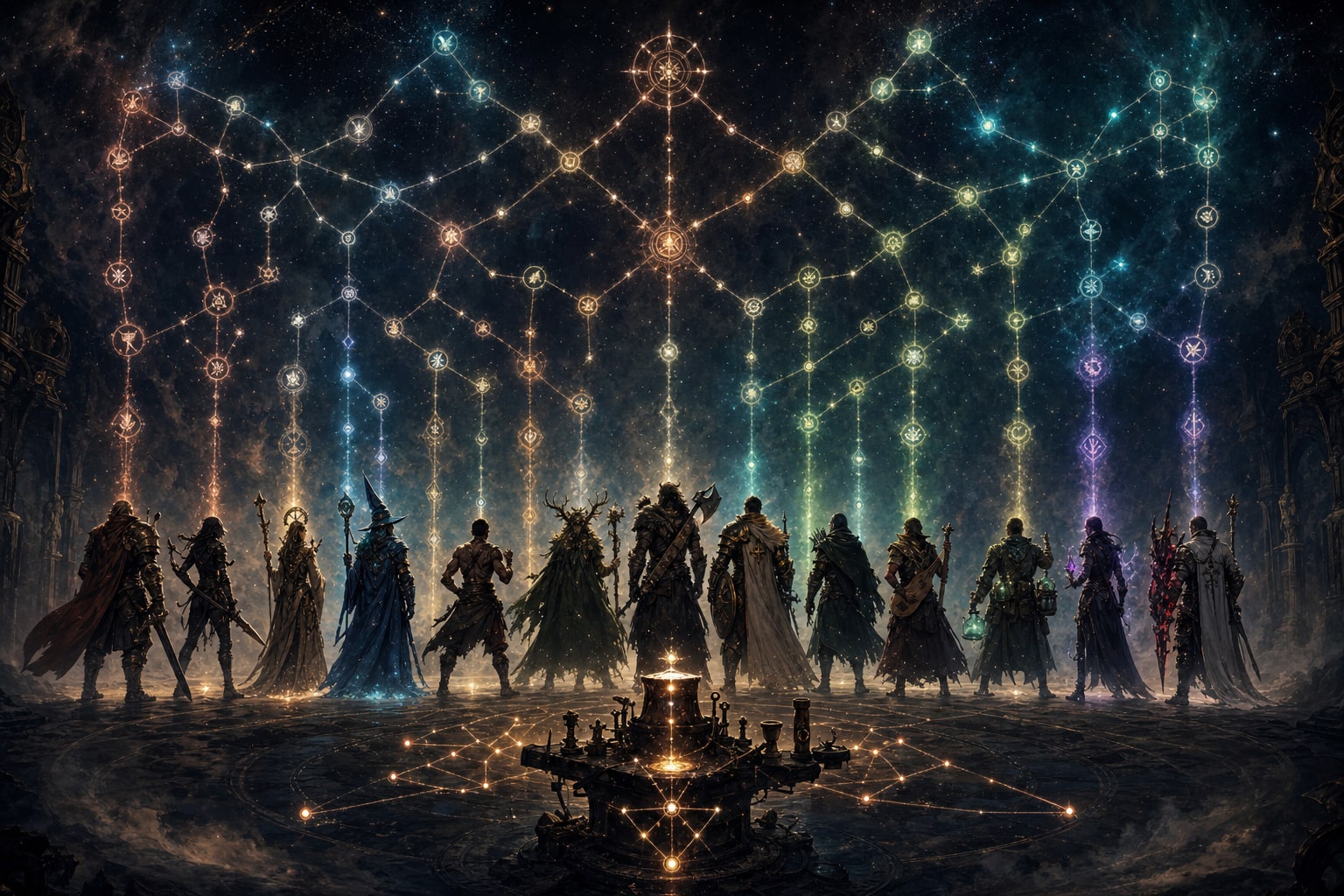
A class tells you where a hero began. A mastery tree asks what they chose to become.
From October 2025 into January 2026, the perk system expanded into branching specializations for Warriors, Rogues, Clerics, Wizards, Monks, Druids, Berserkers, Paladins, Rangers, Bards, Alchemists, Psionicists, Blackguards, and Inquisitors.
Paths inside the class
Warriors could lean into armor, tactics, or aggressive control. Rogues gained assassin, master-thief, shadow, and trap-facing choices. Clerics split healing, battle, and domain mastery. Wizards shaped evocation, control, and defensive casting. Monks developed Iron Fist, Iron Body, shadow, and elemental traditions fueled by a broader ki-point system.
Druids, Berserkers, Paladins, Rangers, Bards, Alchemists, Psionicists, Blackguards, and Inquisitors received their own themed trees in turn. The system saves choices, participates in respec, supports toggleable effects, and exposes lists and categories so a player can understand the road ahead.
Mastery at the workbench
Crafting and harvesting gained a parallel talent system. Skill growth awards talent points. Mote Synergy can improve material yields; Proficient and Efficient families sharpen reliability and speed; Insightful and critical-success mechanics reward deeper investment. Craft score began showing the modifiers behind the result instead of hiding them.
Crafting stations became meaningful locations, supply orders were simplified around artisan points, and successful work could feed the next tier of specialization.
Built to be switched deliberately
The perk framework is controlled by a campaign setting and remains disabled by the source default until operators choose to enable it. That gate is intentional: hundreds of class choices deserve balance review in the campaign where they will run. Prestige-class integration also began in stages rather than being declared finished all at once.
The constellation is drawn. Campaigns can decide when to let players navigate by it.