Development
The Questline Atlas and the Cartographer’s Glass
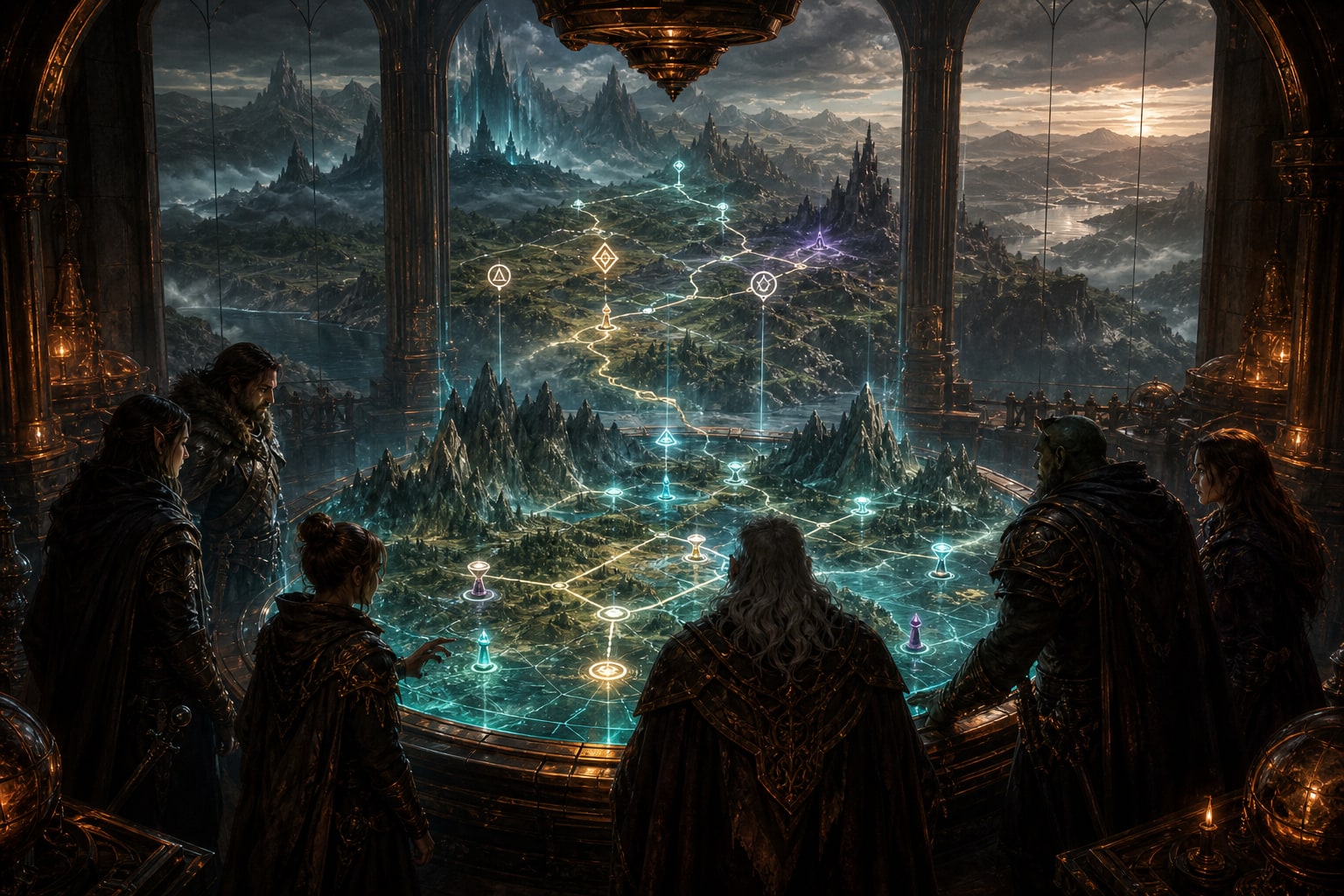
A quest log tells you what is unfinished. An atlas tells you where the story is going.
The questline command gave connected quests an explicit shape. Players can inspect the chain that binds individual tasks into a larger storyline, while ordinary quest output now points toward that view.
Targets in the world, not only in the log
Quest targets can be marked when listed in a room, including multi-creature kill objectives. Quest-progress output gained clearer target detail. A save-and-load bug that could erase progress for some quest types was repaired, and dialogue quests regained their ability to advance.
Tracking acquired a maximum distance tied to Survival, turning it into a readable skill constraint rather than an unlimited line across the world. Additional damage messages, safer teleport rules, material storage and unstorage, and a configurable Mudlet package download smoothed the journey around those goals.
A glass for modern clients
The server expanded its MSDP support for the new web client, including a graphic map and wilderness map data. A protocol parser harness gave negotiation and client-data paths direct regression coverage. Faerun also gained commands and functions for exporting world maps as viewable HTML.
These are two halves of the same promise. The questline atlas explains the narrative route. The cartographer’s glass explains the spatial one. Neither plays the game on a character’s behalf; both make intention visible enough that the next decision belongs to the player rather than to guesswork.